


05 Oct 2026 Winning the Battle on the Shelf and Online
Five Insights from 25 Years of Brand Development and Packaging Design
What makes one package stand out while another goes unnoticed? Why does one packaging range develop into a strong, recognisable brand, while another remains little more than a collection of individual products?
After 25 years of brand development and packaging design for the retail, food, foodservice and non-food sectors, these are questions we still regularly hear at Stepfive.
And the answer is actually surprisingly simple:
Success comes when brand, packaging and product experience reinforce one another.
Because the battle for consumers’ attention is no longer fought solely on the physical retail shelf. Brands now compete simultaneously in supermarkets, online stores, supermarket apps, advertising and across social media.
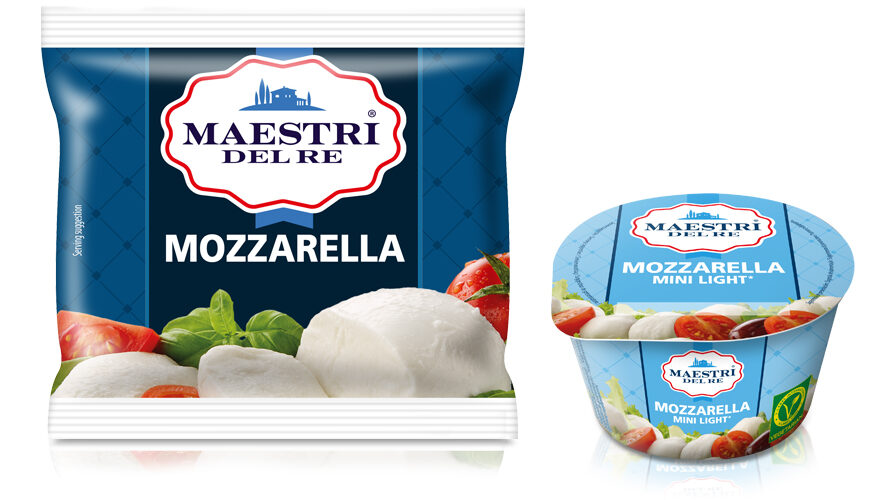
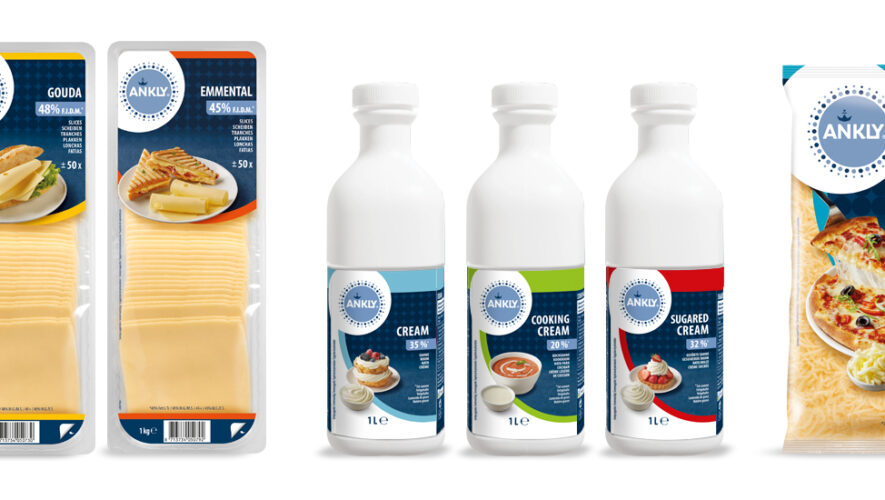
This brings an additional challenge. Particularly with larger product portfolios and private label brands, it is not enough for each individual package to be strong. The entire product range needs to work together as one consistent and recognisable brand family.
At Stepfive, we therefore focus not only on individual packaging designs, but on developing complete brand and packaging systems that can be consistently applied across dozens or even hundreds of SKUs.
Based on the brands and packaging ranges we have developed for retailers, manufacturers and brand owners over the past 25 years, five key insights consistently stand out.
1. Standing Out Is Just the Beginning
On the retail shelf, packaging has only a few seconds to capture the consumer’s attention.
Colour, typography, photography, illustration, shape and materials can help a product stand out from its competitors. But attention alone does not sell a product.
The real challenge begins after that.
Within seconds, consumers need to understand:
What is it?
What brand is it?
Which variant is it?
And why should I choose this one?
That is why, when developing packaging design at Stepfive, we look beyond the individual pack and always consider the environment in which it needs to perform.
Which visual codes are recognisable within the category? Which colours dominate the shelf? How do competing brands present themselves? And where is there room to stand out without losing the visual cues consumers associate with the category?
After all, the packaging that shouts the loudest is not necessarily the packaging that wins.
The strongest packaging gets noticed, understood and remembered.
That last point is essential. Winning the first purchase is important, but ultimately, you want consumers to recognise the brand again the next time they shop.
Good packaging design is therefore not just about shelf impact. It is about building brand recognition and brand preference.
2. Design the Range, Not Just the Packaging
This is perhaps one of the most important lessons when developing larger product ranges and private label packaging.
An individual pack can look excellent and still be part of a weak packaging range.
When every SKU is designed to stand out as much as possible on its own, the range as a whole can become visually fragmented. Consumers may see a collection of different products rather than one clearly recognisable brand.
That is why, at Stepfive, we prefer to design with the entire product range in mind.
A strong packaging range needs to work on three levels:
Category → brand/range → product variant.
Consumers need to quickly identify the category they are looking for, then recognise the brand or product range, and finally be able to easily find the desired flavour, application or variant.
This requires a clear packaging architecture.
Which elements remain consistent across every pack? Where is colour coding used? How do the brand name and product name relate to each other? How are different flavours and variants distinguished? And which information takes priority?
And just as importantly: what happens when new products are added to the range next year?
A packaging system that works perfectly for five products can quickly reach its limits when the range expands to twenty, fifty or a hundred SKUs.
At Stepfive, we therefore develop private label packaging systems and packaging design for large retail ranges that are not only distinctive, but also practical, scalable and consistent across large numbers of products, formats and variants.
So don’t just design the packaging you need today. Design a system that can accommodate the product range of tomorrow.
3. Protect Brand Recognition: a Redesign Is Not a Goal in Itself
With a packaging redesign, the focus can quickly shift towards renewal.
The design may need to become more modern, distinctive or appealing — and there may be every reason to do so. Perhaps the existing packaging has become outdated, competitors have strengthened their presence, or the visual identity no longer reflects the brand’s current positioning.
But existing brand recognition has value.
Consumers learn to recognise a brand through consistent visual elements: colour, logo, typography, photography, illustration style, shapes and other distinctive graphic features.
These are brand codes.
When too many of these recognisable brand cues disappear at the same time during a redesign, the brand may look more modern, but it can also become less recognisable.
That is why, at Stepfive, we prefer not to start with the question:
How can we make this packaging completely different?
Instead, we ask:
What already works?
What makes the brand recognisable?
What needs to be improved?
What can we let go of?
And what should we absolutely retain?
This applies to national brands, but certainly to private label as well. With larger product ranges, a change in brand architecture can have an impact on dozens or even hundreds of packaging designs.
A successful redesign does not need to prove how much has changed.
It should make the brand more relevant and stronger, without unnecessarily sacrificing the brand recognition that has been built over time.
Sometimes that requires a major change. In other cases, a focused evolution can be far more powerful than a complete revolution.
The art of a successful redesign therefore lies not only in what you change, but above all in what you consciously choose to preserve.
4. Win Not Only on the Physical Shelf, but on the Digital Shelf Too
Packaging is still often evaluated at full size.
But increasingly, consumers encounter a product for the first time on a screen.
In an online store or supermarket app, the same packaging appears as a small product image among dozens of alternatives. Details that work beautifully at full size can disappear completely in this digital environment.
Small typography becomes unreadable. Subtle colour differences disappear. Product names become difficult to distinguish. And packaging designs that look clearly different on the physical shelf can suddenly appear remarkably similar online.
That is why, at Stepfive, we increasingly evaluate packaging design across two distinct retail environments:
the physical and the digital shelf.
A simple test is:
Can you still recognise the brand, the product and the variant when the packaging is reduced to the size at which consumers actually see it online?
This requires a clear visual hierarchy.
What should consumers see first?
The brand? The product type? The flavour? A key claim? A distinctive ingredient?
Not everything can be the most important message at the same time.
Good packaging design therefore determines not only what you communicate, but also the order in which consumers see and process the information.
From a distance, or as a small thumbnail online, the brand and product need to be instantly recognisable. At closer range, the variant, flavour and key benefits come into focus. Only then should the more detailed product information follow.
The digital shelf is therefore no longer simply an extension of the physical shelf.
It is a second retail environment in which the same packaging also needs to perform.
5. Connect Strategy, Emotion and Execution
A product range can be built on rational principles. Consumers, however, do not always make rational choices.
People don’t just buy coffee, cheese, chocolate, a meal or a household product.
They also buy an expectation.
Quality. Convenience. Health. Enjoyment. Indulgence. Authenticity. Trust. Status. Or simply value for money.
Strong brands know how to consistently communicate this emotional value.
That is why good packaging design does not start with the question of which colour or typeface to use.
The more important question is:
What position should this product or brand occupy in the consumer’s mind?
Only when that positioning is clear can the brand identity and packaging design bring that promise to life.
But it doesn’t stop there.
A creative concept is only truly strong when it can also be effectively executed.
Particularly in retail and private label, a design needs to work consistently across different product categories, packaging formats, sizes, languages and large numbers of SKUs. Claims change, ingredients vary and regulatory information needs a clear place, without diluting the brand identity along the way.
This is where an important part of our expertise lies.
Stepfive combines brand development and packaging design with the technical implementation and multilingual DTP of packaging. This means that, even during the concept development stage, we already consider the practical implications of a design across the entire product range.
From strategy and positioning to packaging design, DTP, multilingual packaging and, ultimately, print-ready artwork.
Strategy, design and execution come together as one in a strong packaging range.
Because it is in the execution that you discover whether a strong concept can truly become a strong brand.
The battle is not won by great design alone
The battle for attention is now being fought on multiple fronts at the same time.
On the physical retail shelf, packaging needs to stand out from its competitors.
Within a product range, different SKUs need to reinforce one another.
Online, the same product needs to remain instantly recognisable, even as a small thumbnail.
And at every touchpoint, consumers should continue to recognise the same consistent brand identity.
That is why, at Stepfive, we do not see packaging design as a stand-alone end product.
Strategy, brand identity, packaging and execution need to work together to tell one consistent and recognisable brand story.
Packaging needs to capture attention today.
And be recognised again tomorrow.
And perform just as strongly online as it does on the physical shelf.
And provide enough structure to successfully add new products to the range.
For us, that is the essence of strong brand and packaging design.
Not just designing to be seen.
Designing to be chosen — and recognised again.
How strong is your brand — on the shelf and online?
Has your packaging range become fragmented over the years? Have more and more exceptions emerged within the range? Has the competition become stronger? Or would you like to know whether your current packaging is just as recognisable online as it is on the physical retail shelf?
Stepfive specialises in brand development, branding and packaging design for retail, private label, food, foodservice and non-food brands.
We develop both individual packaging designs and complete packaging ranges, as well as scalable packaging design systems for product portfolios with large numbers of SKUs.
From strategy, positioning and brand identity to packaging design, multilingual DTP, prepress and print-ready artwork.
Strategic Packaging Audit
Would you like to discover where the opportunities lie within your existing packaging range?
As part of a strategic packaging audit, we assess areas including: brand recognition, shelf impact, competitive positioning, packaging architecture, product range structure and online visibility..
This provides a clear understanding of what is already working well, what should be retained, and where opportunities exist to strengthen the positioning of both the brand and the overall product range.
Stepfive – Strategic Brand & Packaging Design BNO
25 years of experience in brand development and packaging design for retail, private label, food, foodservice and non-food brands.
Email:rob@stepfive.nl
024 622 1711
Frequently Asked Questions About Packaging Design
What makes packaging successful on the retail shelf?
Successful packaging captures attention, quickly communicates what the product is and builds brand recognition at the same time. Shelf impact comes from the right combination of positioning, differentiation, brand codes, colour, typography, photography and a clear information hierarchy.
What makes a strong packaging range?
A strong packaging range has a clear packaging architecture in which the category, brand and product variant are instantly recognisable. Individual SKUs are distinctive enough to stand out, while clearly belonging to the same brand family. The system also needs to be scalable as new products are added to the range.
Why is packaging design important for private label brands?
Private label brands increasingly compete on brand experience, quality and differentiation rather than on price alone. A strong and scalable packaging architecture helps retailers present large product ranges consistently and recognisably as one brand or cohesive product family.
How do you develop packaging design for a large number of SKUs?
For large product ranges, it is important to first develop a scalable packaging design system and a clear packaging architecture. Consistent brand codes, information hierarchy, colour coding and clear rules for different product variants make it possible to roll out dozens or even hundreds of SKUs consistently without diluting the brand identity.
Why does packaging need to perform well online too?
In online stores and supermarket apps, packaging is often displayed at a very small size. The brand, product type and variant therefore need to remain instantly recognisable, even as a thumbnail. A packaging design that performs well on the physical retail shelf is not automatically just as effective on the digital shelf.
When does a packaging range need a redesign?
A redesign may be needed when the brand positioning has changed, brand recognition is declining, competitors have become stronger, new SKUs no longer fit logically within the existing packaging range, or the packaging lacks sufficient visibility and recognition online. A strong redesign strategy determines not only what needs to change, but also which existing brand codes should be retained.